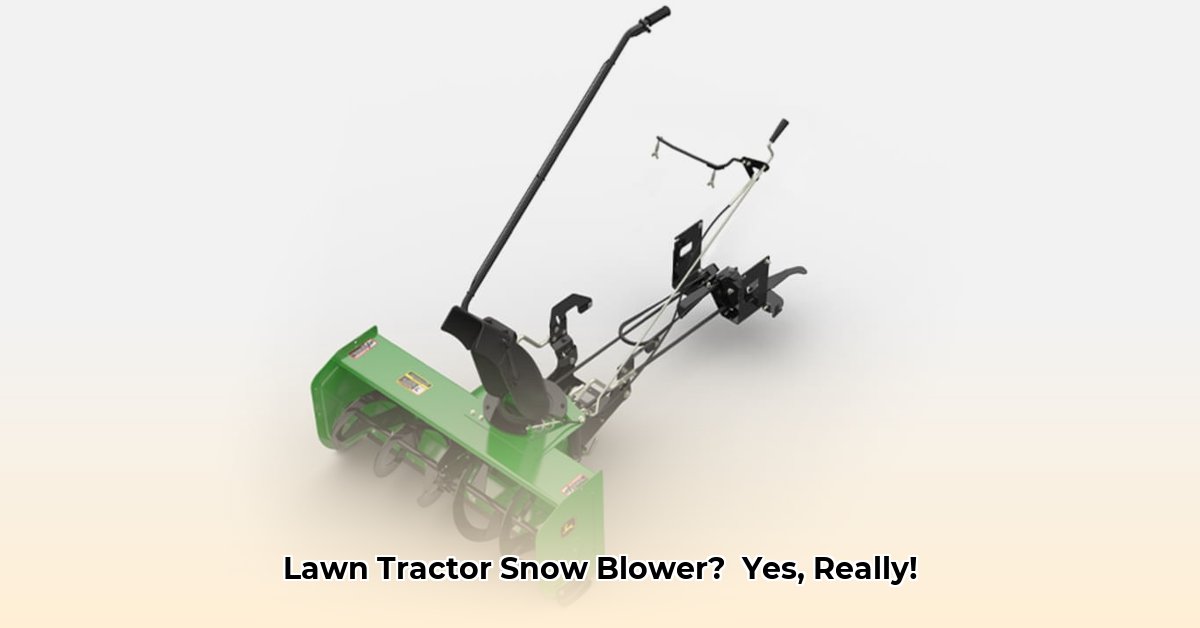
Ditch the back-breaking shoveling this winter! Transform your garden tractor into a snow-removal machine with the right snow blower attachment. This comprehensive guide helps you choose the perfect attachment, saving you time, effort, and your back. We'll cover everything from auger types to installation, ensuring you conquer the snow with ease and efficiency. For more options, check out this helpful resource.
Understanding the Crucial Factors for Snow Blower Selection
Choosing the right snow blower attachment requires understanding several key factors. Think of it like selecting the right tool for a specific task—you wouldn't use a hammer to screw in a bolt, right? Let's explore the essential elements:
Auger Types: The Engine of Snow Removal
The auger is the heart of your snow-clearing operation; it's what ingests, shreds, and expels the snow. Three main types exist:
Single-Stage Augers: These are the most basic and affordable option, ideal for light, fluffy snow on smaller properties. Think of them as a powerful, motorized shovel. They are easy to maintain but struggle with heavy, wet snow. Are single-stage augers right for your light snowfall?
Dual-Stage Augers: These are workhorses, first chewing up the snow and then throwing it—significantly more efficient in moderate to heavy snowfall. They handle deeper snowdrifts with ease but come with a higher price tag. Do you anticipate frequent heavy snowfalls?
Tri-Stage Augers: These are the heavy-hitters, designed for the toughest winter conditions. They excel at clearing heavy, wet, or packed snow. They are the most expensive and require slightly more maintenance but are worth the investment if you routinely face challenging snow conditions. Is your budget sufficient for a tri-stage system's superior capabilities?
Here's a comparison table summarizing their key differences:
| Auger Type | Ideal Snow Conditions | Property Size | Pros | Cons |
|---|---|---|---|---|
| Single-Stage | Light, fluffy snow | Small to medium | Simple, affordable, easy maintenance | Struggles with heavy, wet snow |
| Dual-Stage | Moderate to heavy, wet snow | Medium to large | Efficient, handles heavier snow well | More expensive than single-stage |
| Tri-Stage | Heavy, wet, packed, icy snow | Large properties | Best for toughest conditions; powerful | Most expensive; slightly more complex maintenance |
Throwing Distance & Clearing Width: Optimizing Coverage
A wider clearing path means fewer passes, saving time. A longer throwing distance keeps snow away from obstacles. However, there's often a trade-off: wider attachments might have shorter throws. Consider your property's layout and typical snowfall when choosing. Larger properties with heavy snow will benefit from a wider clearing path and a longer throw.
Chute Material: Steel vs. HDPE Plastic – A Durability and Cost Analysis
The chute directs the snow's path. Steel and high-density polyethylene (HDPE) plastic are common materials:
Steel Chutes: Incredibly durable, resisting damage from rocks or ice, but heavier and more expensive.
HDPE Plastic Chutes: Lighter and more budget-friendly but more susceptible to cracking from impacts.
Tractor Compatibility: Ensuring Seamless Power Transfer
This is critical! Your tractor must have sufficient horsepower (HP) to power the snow blower. Consult your tractor's owner's manual for recommended HP ranges for attachments. Mismatched horsepower can damage your tractor. Also, verify compatibility with your tractor's Power Take-Off (PTO) system (the mechanism that transfers power from the tractor to the attachment).
Comparative Review of Top Models
This section would typically include detailed reviews of several popular models. Due to space constraints, we'll focus on key features to consider when comparing models:
- Ease of Use: How easy is the attachment, operation, and maintenance?
- Clearing Capabilities: Does it efficiently handle your typical snowfall? Check the stated clearing width and throw distance.
- Chute Material: Weigh steel's durability against plastic's cost-effectiveness.
- Warranty: A longer warranty suggests manufacturer confidence.
- User Reviews: Research what other owners say about their experiences.
Choosing the Right Attachment: A Step-by-Step Guide
Answer these questions to guide your selection:
Property Size: Small yards with light snow might only need a single-stage attachment. Larger properties with heavy snowfall require more powerful dual or tri-stage models.
Typical Snowfall: Light, fluffy snow? A single-stage might suffice. Heavy, wet snow? You'll likely need at least a dual-stage system.
Budget: Single-stage units are cheaper; tri-stage systems are the most expensive. Steel chutes are pricier but more durable.
Tractor Capabilities: Verify your tractor's horsepower, PTO capabilities, and hydraulic lift capacity against the snow blower's specifications.
Installation, Maintenance, and Safe Operation
Installation: Follow the manufacturer's instructions carefully. Improper installation can cause damage.
Maintenance: Regularly inspect the auger, chute, and drive system for wear. Lubricate moving parts. Clean the unit thoroughly after each use. Proper storage during warmer months extends its lifespan.
Safety: Always wear appropriate safety gear (eye protection, gloves, etc.). Never operate near children or pets. Be aware of your surroundings, especially obstacles and slippery surfaces.
Conclusion: Conquering Winter with Ease
Choosing the right lawn tractor snow blower attachment can significantly improve your winter snow removal process. By considering the factors discussed, you'll select an attachment that meets your specific needs, ensuring a safe and efficient snow-removal experience. Remember to always prioritize safety and consult your owner's manual.